English as a 
Second Language (ESL)
It's your first day in school. For some time now, everybody you know has been talking about how you are going to learn to read and write, and how you'll be attending school soon. You're a little afraid about this. You have your backpack and all your school supplies ready. As you walk into the classroom the teacher begins to give instructions to everybody. You know some English because you have watched hours of television. She calls out the children's names but she can't pronounce yours. The other children seem to know what's going on. They all know what to do, except for you. You feel lost and alone. Are the other kids laughing at you? Learning in school is not going to be easy.
Total Immersion
Full immersion programs are targeted for younger students, usually kindergarten through second grade. Depending on the school, instruction may be in English or in the foreign language. The Center for Applied Language describes the total immersion program as starting out instruction in the foreign language and then increasing English instruction by the upper grades. A model school, The Pioneer Valley Chinese Immersion Charter School in Massachusetts has the following educational program( http://www.pvcics.org/.) In grades K-1st, 75% of the daily instruction is in Chinese and 25% in English. In grades 2nd-5th, 50% of the daily instruction will be in Chinese and 50% in English. In grades 6th-8th, 25% of the daily instruction will be in Chinese and 75% in English. English Language Arts is always taught in English by a teacher with native English proficiency. Students taught in Chinese are taught by a bilingual Chinese/English teacher with native or near-native proficiency in Chinese. Art, music, health and physical education is taught in English or Chinese. Total immersion programs are relatively new in the U.S. They are more common in other countries. Advocates of this program suggest that the younger the child, the better it is to have them in a full immersion program. A full immersion program is very intense and is not for everyone. If instruction is given only in English, some students may find it difficult to learn without references in their native tongue. There are also parents that are opposed to this type of program because they feel that their children will forget their roots.
Submersion
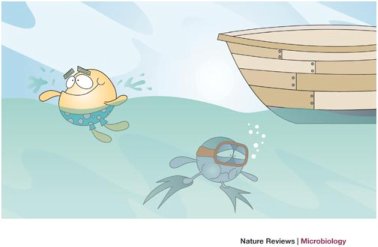
The submersion program is often nicknamed the swim or sink program. In this program, foreign language students are placed in an ordinary classroom where English is spoken. This form of learning is the oldest model. There aren't any special programs to help the students overcome the language problem. In the submersion program, non-English speakers compete with native English speakers in the same classroom. The teacher doesn't know any other language besides English and the minority language is not used at all in the classroom. In the case Lau vs. Nichols, the Supreme Court found that the submersion approach violated the civil rights of language-minority students and that schools had to make an extra effort to help overcome the language problems of these students. Students may learn some English because they are forced to, but the student may fall behind in other areas.
Partial Immersion

Partial immersion programs differ from total immersion ones in that they have up to 50% of subjects taught in the foreign language; in some programs, the material taught in the foreign language is reinforced in English. The following curriculum example is from Gunston Middle School in Arlington Virginia. http://www.apsva.us/gunston/site/default.asp The program begins in middle school and is designed to continue the development of Spanish language proficiency. The skills of speaking, listening,reading and writing are taught through the language arts program and through content instruction in social studies and science. Student placement in the program is open to students who show appropriate proficiency in Spanish.
All middle school students who participate in the Spanish Partial Immersion Program follow the same core curriculum as students at each of the Arlington middle schools.
Language of Instruction | |
English
|
Spanish
|
Partial Immersion programs are not nearly as effective as total immersion ones. Students do not develop the same level of foreign language proficiency as students in total immersion. As a result, students may have greater difficulty dealing with the school curriculum in latter years. On a positive note, partial immersion is easier to staff. Partial immersion needs fewer special teachers; one teacher can serve two immersion classes for one half day each.
Dual Language(2 Way Immersion)
Dual language or two way immersion programs give equal emphasis to English and a non-English language. Two-way immersion programs promote bilingualism and positive cross-cultural attitudes in all students. According to National Association for Bilingual Ed(NABE), using Spanish can help native Spanish speakers feel pride in themselves, leading to greater self-esteem. The classroom is composed of one to two thirds of the students being native speakers of the foreign language, with the remainder being native speakers of English. http://www.cal.org/twi/initialliteracy.pdf
Maintenance
The goal of a maintenance bilingual program is to preserve and enhance students' skills in the


