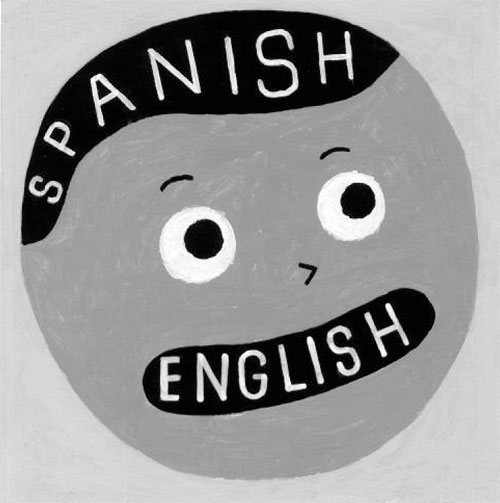
To learn more about how students are identified for placement in a bilingual class in Illinois please visit http://www.isbe.state.il.us/bilingual/htmls/bilsp.htm
To learn more about teacher certification and preparation please visit http://www.academploy.com/cert/certil.htm
How are students identified for placement in a bilingual class in Illinois
In order to identify a student for placement in a bilingual class each district administers a test to all new students. The survey includes questions that will identify a students as having a non-English background. A sample question asked is whether the student speaks another language besides English and if so what language. The child must take the test 30 days after being admitted into the school in order to be able to be placed into the bilingual program if needed. If a student’s test is declared as not proficient through the state superintendent of Illinois then they are eligible for bilingual education. But if the student’s test is determined as proficient the school district can ask for a different type of evaluation such as a sample of the students work and teachers’ evaluations of work, then if it is found that their English lacks its full potential then they will be given the services.
Illinois Measure of Annual Growth Test (IMAGE)
IMAGE started out through a group that was established in 1993 called the legislative task force on Student’s Alternative Assessment systems. This group was in charge of making ways to assess LEP students. IMAGE came into play when criticism arose that students enrolled in bilingual education more than one year were required to be tested. The Task Force turned in their recommendation which in response the Illinois Measure of Annual Growth Test was created which states that students enrolled in bilingual education programs are tested to measure the progress of their skills in the English language. This test is given to make sure that the students in the bilingual education programs were indeed learning English.
According to the Illinois State Board of Education website, IMAGE measures the progress of bilingual education students in attaining the English-language reading and writing skills that are needed in order to meet the Illinois Learning Standards. IMAGE is given to students yearly in grades 3-11 who cannot take the ISAT or PSAE because of their lack of knowledge of skill in the English-language. It measures reading and writing at three grade level spans 3-5, 6-8, 9-11. The reading and writing test each given 40 minutes to be completed. IMAGE is different then most English-proficiency tests because it requires students to read different literary genres and then answer questions that may have more than one correct answer. This allows students of different proficiency levels a chance to at least get one answer correct. This helps see how the student has progressed year to year and how they compare with their peers which is helpful to teachers and parents.
Teacher certification and preparation in Illinois
In order to be a certified teacher in bilingual education you must have a valid Illinois certificate with an endorsement or approval in bilingual education or an endorsement in ENL with a language-specific designation for bilingual education. The teacher must also have a Transition Bilingual Certificate endorsed in teaching a language other than english and it must be issued by the state board of education. Last the teacher must have a visiting international teaching certificate for teaching another language besides english. Another requirement is 100 clock hours in teaching experience in bilingual programs. In order to be a certified teacher in bilingual education you must have a valid Illinois certificate with an endorsement or approval in bilingual education or an endorsement in ENL with a language-specific designation for bilingual education. The teacher must also have completed a language examination in the non-English language that they will be teaching. Once the teacher has complete this which is also called a type 29 they will receive their certificate. The certificate is only valid for six years but can be extended for another two years which makes and eight year max time before you would have to renew it. The teacher must also complete 18 hours in the following courses Foundations of Bilingual Education, Assessment of Bilingual Students, Methods and Materials for Teaching Limited-English-Proficient Students in Bilingual Programs, Cross-Cultural Studies for Teaching Limited-English-Proficient Students, and Methods and Materials for Teaching English as a Second Language.
Advantages of bilingual education programs 
Bilingual education is a very controversial subject matter. Bilingual education has many advantages in helping students. By allowing the students to learn in their native language it helps them academically because it allows them to fully understand concepts needed to move on to the next grade level, but it also helps them with their English proficiency so as they keep on they will eventually be able to comprehend and learn in English. According to Stephen Krashen the author of the article Why Bilingual Education, when schools provide children quality education in their primary language, they give them two things: knowledge and literacy. If the students have a great amount of knowledge in their native language it helps make English more understandable. Bilingual education also helps the students understand and accept multiculturalism because they learn about other students cultures and backgrounds. Another important advantage is that it helps and prepares students for their future. It allows students who had no proficiency in the English-language to have the same opportunities as a person who’s first language is English.
There are many more advantages to bilingual education according to the article Balanced Bilingual Education results in cognitive, linguistic, and social advantages by Pam Bremer. Bilingual education has linguistic advantages because bilingual students can understand the difficulty of a language and can make better corrections because they can understand the meaning and grammar more. They also are able to use the meaning of words and they show more skills in problem solving and analytical tests. Some cognitive advantages are that they can make connections between different languages and symbols. Lastly some social advantages of bilingual education programs are the abilities to be able to communicate with others, and be more open minded and be more sensitive to other peoples cultures and languages.

